Special Defence Contribution (SDC): A Complete Guide (Updated 2026 Reform)

Our blogs are regularly updated to ensure information is current and accurate.

Andreas is a Corporate Lawyer and Managing Director of EasyCorporate. Read more
What Is the Special Defence Contribution (SDC)?
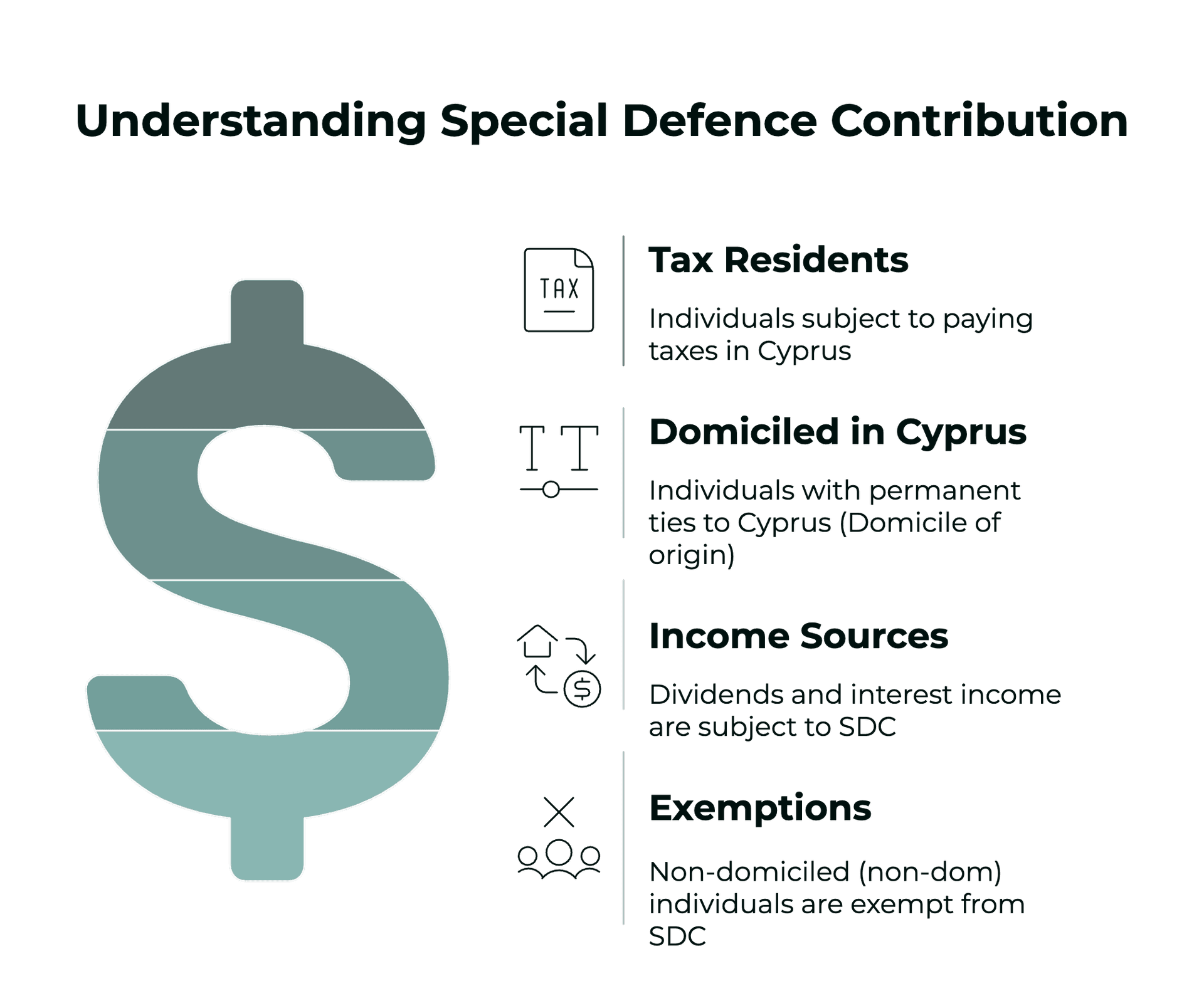
Tax residents of Cyprus that are also domiciled in Cyprus that receive income from dividends and interest are required to pay the Special Defence Contribution (SDC). In essence, the SDC is a tax designed to raise money for the national defence of Cyprus.
As of January 2026, there have been major changes to SDC. Mainly, SDC on dividends has been reduced from 17% to 5% and SDC on rents has been abolished.
Who Is Exempt from SDC?
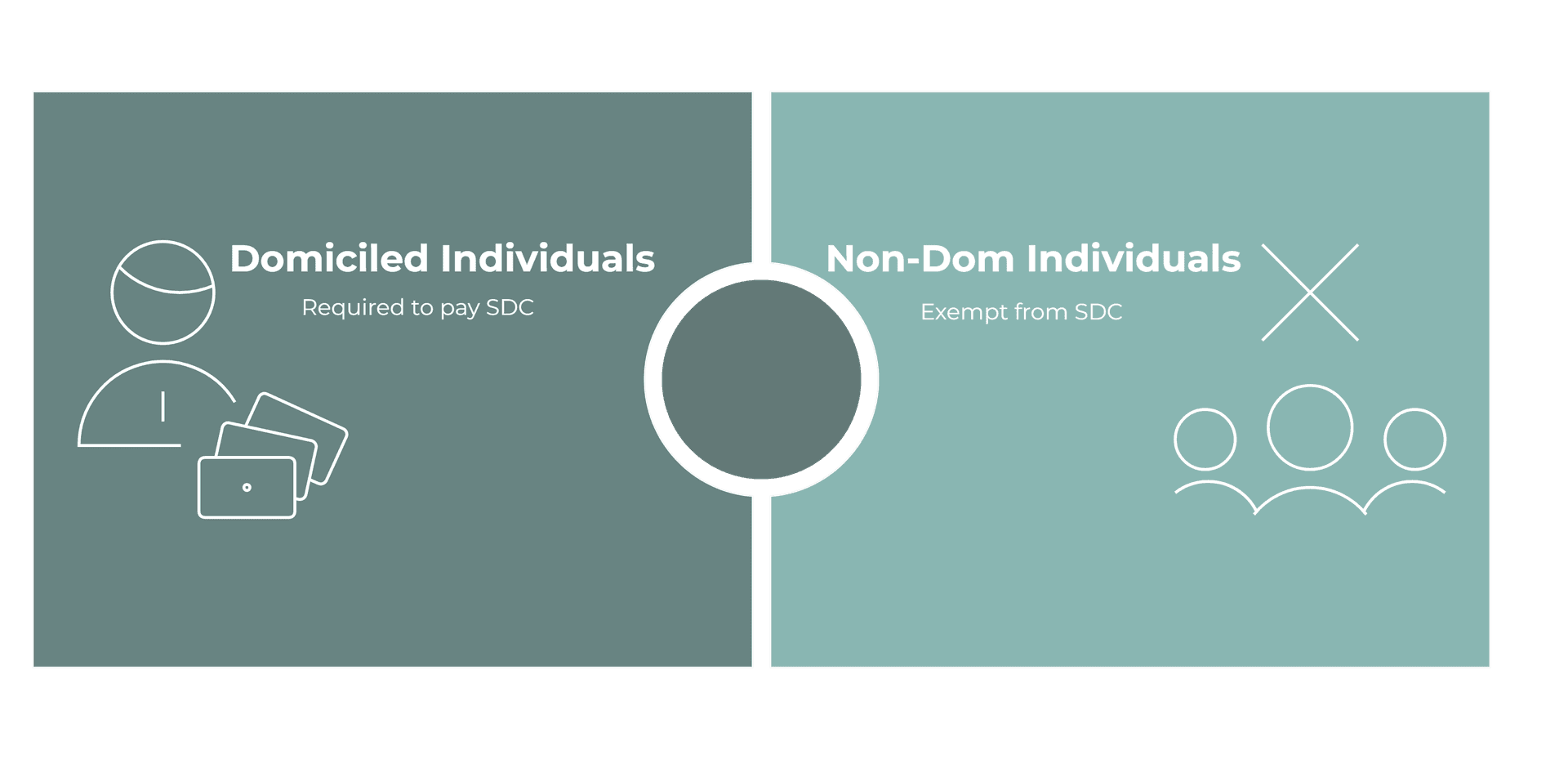
Non-domiciled individuals are exempt from SDC. Make sure to read our detailed guide on non-domicile to check if you qualify for non-dom status, as well as our 3-Step Non-Dom Tax Optimisation Guide .
Taxation on Dividends
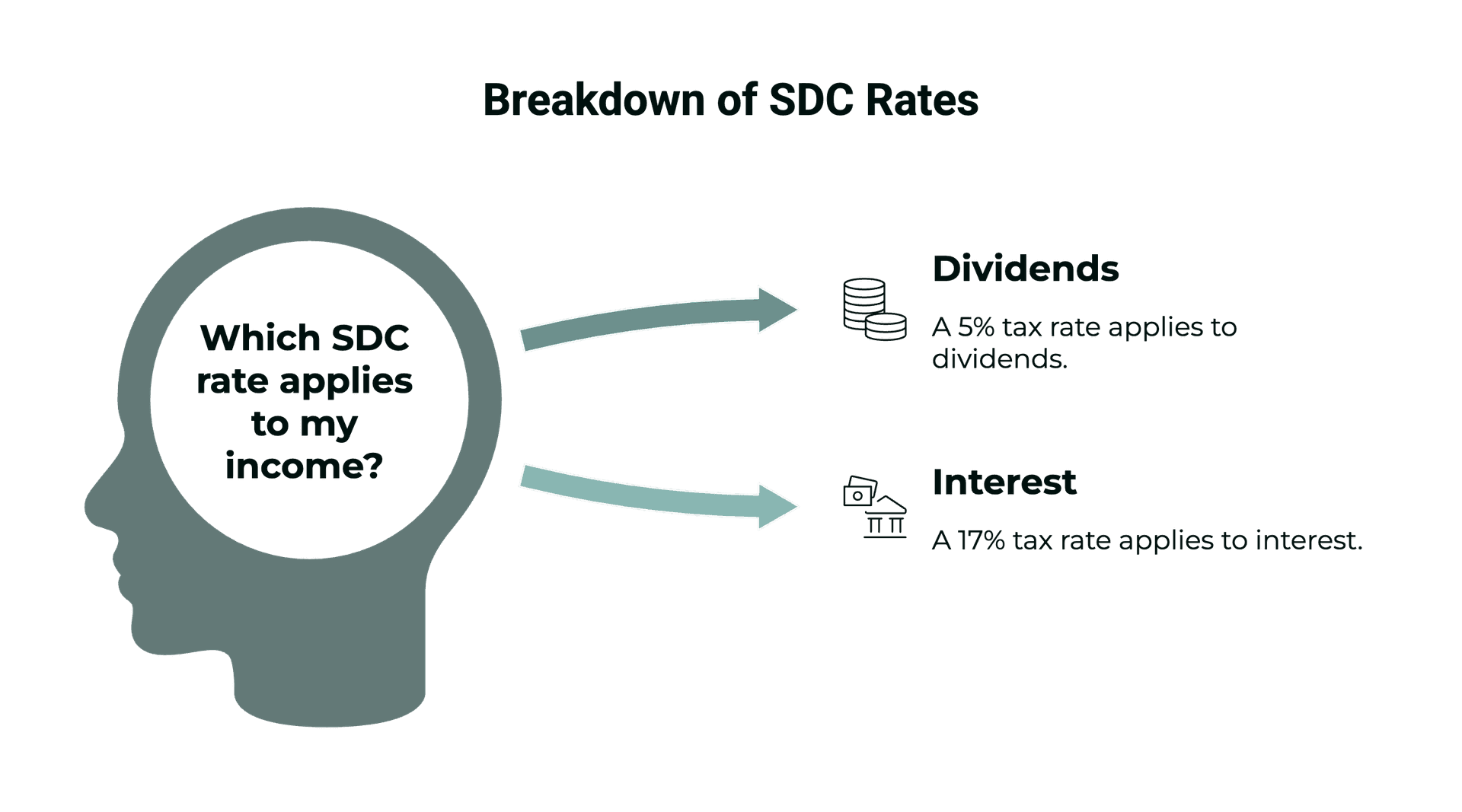
Although dividends are exempt from income tax, they are not tax free. There is a 5% SDC tax on profits distributed by companies to their shareholders. However, different conditions apply depending on whether the shareholder is an individual or a company.
Dividends Received by Individuals
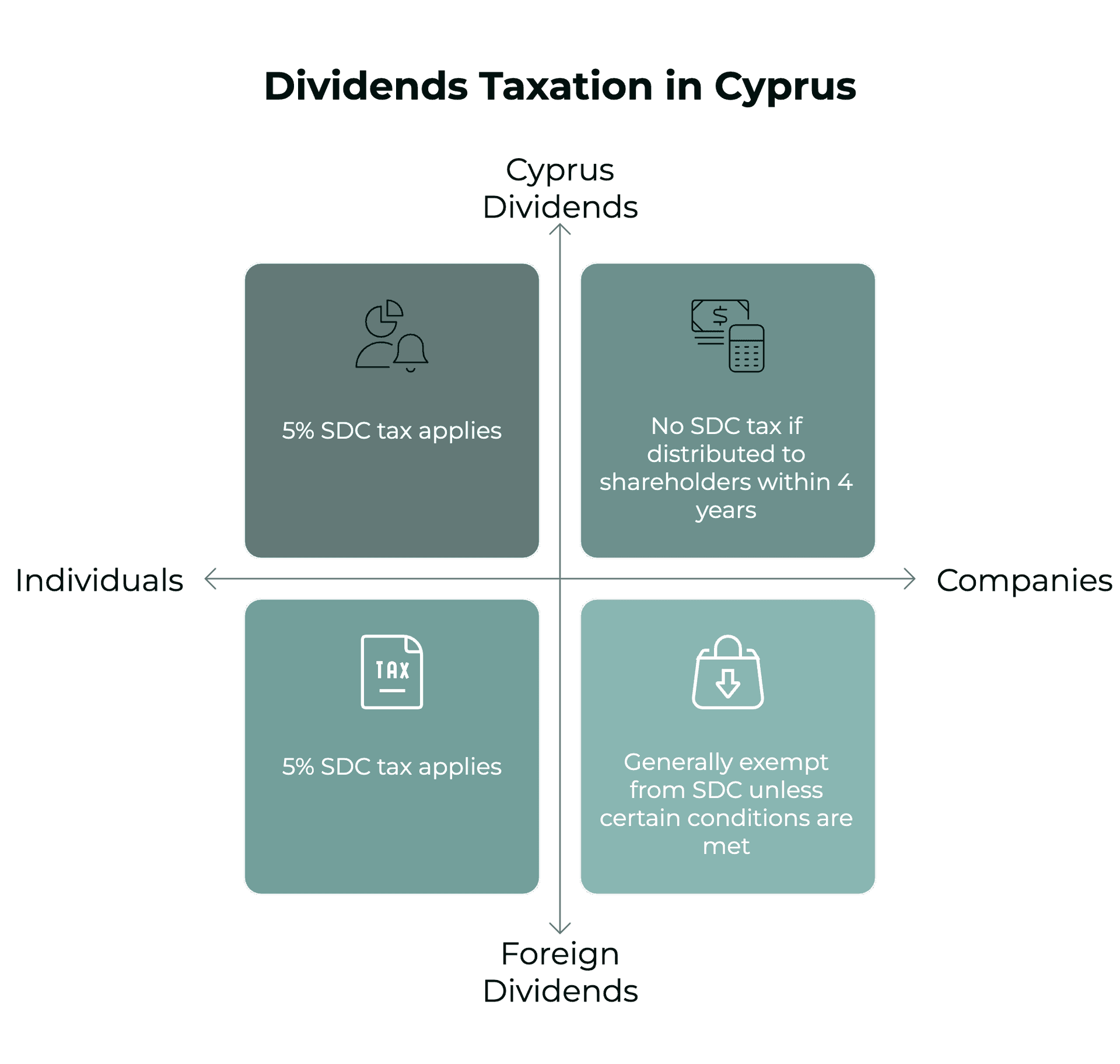
Individuals who are shareholders in a Cyprus company must pay the 5% SDC tax on the dividends they receive. This is also applicable if the dividends received are coming from abroad.
Dividends Received by Companies
If a company in Cyprus receives dividends from another company in Cyprus, it doesn't have to pay the 5% SDC tax on these dividends. However, this exemption applies only if the dividends are distributed within 4 years from the end of the year the profits were earned. After 4 years, the 5% SDC tax applies.
For example:
Company A is a shareholder of Company B. In 2026, Company B earns profits. If Company B distributes these profits as dividends to Company A from 2027 until 2030, then Company A will not pay any SDC tax.
But if Company B distributes these profits as dividends to Company A after 2030, then Company A will be liable to pay the SDC tax.
This exemption to payment of the SDC on dividends received by companies is also applicable to dividends received by a company abroad. This means that a company in Cyprus that is a shareholder in a foreign company, generally won't be required to pay the SDC on the dividends received.
However, the exemption does not apply if the following conditions are met:
-
The foreign company earns more than 50% of its income from investments (like stocks, bonds, etc.), and
-
The foreign company pays significantly less tax on its income compared to what the Cypriot company would pay in Cyprus.
Disposal of Assets
Keep in mind that if a company gives a company asset (like a property) to a shareholder or their close family for free or at below market price, it's still considered as a dividend and is subject to the SDC.
Deemed Dividend Distribution (Abolished)
Deemed Dividend Distribution essentially meant that if a company made a profit, it was assumed to have paid out 70% of those profits as dividends to shareholders within two years, so shareholders were taxed on those “deemed dividends” even if they didn’t actually receive any money.
Deemed Dividend Distribution has been abolished as of January 2026.
SDC Payment Deadlines
Dividends
Companies that pay dividends to their individual shareholders are required to withhold the SDC from the dividends of their shareholders and pay it to the Tax Authorities. Companies must declare these using form TD603 and pay the SDC through the Tax Portal by the end of the month following the month in which the dividends were paid.
For example:
If the company paid dividends to its shareholders in July, they must make the relevant SDC payment by the end of August.
Alongside paying SDC on dividends, companies must also pay 2.65% GESY (Healthcare Contribution) on these dividends on the same date. Payments are made through the Tax Portal.
SDC on Interest: What You Need to Know
Interest is the return on investment when money is saved or invested. If you live in Cyprus and earn interest (with some exceptions), you'll be taxed 17% on that interest.
Business Interest Exemptions
However, interest from everyday business activities is not subject to SDC. What this means is that when a business such as a bank earns or pays interest as part of its everyday activities, that interest is considered normal business interest and the bank is not required to pay the SDC on that interest.
Refund Conditions for Low-Income Individuals
Additionally, if your total annual income (including interest) is €12,000 or less, you can get a refund for any SDC that you paid (or was withheld from your income) over 3%.
Payment of SDC on Interest
SDC on interest must be withheld and paid to the Tax Authorities using form TD602 through the Tax Portal by the end of the month following the month in which the interest was paid.
For example:
For interest payments made in July, the applicable SDC must be paid by the end of August.
SDC on Rental Income (Abolished)
The law used to impose a 3% SDC on 75% of the gross rental income. This has been abolished as of January 2026, meaning that rental income is now only subject to income tax and not SDC.
How to Manage Your SDC Obligations Efficiently
The Special Defence Contribution (SDC) is a key part of Cyprus' tax system, affecting dividends and interest. If you're unsure about your obligations or need help managing your SDC duties, we're here to make it easier for you.
Need Expert Advice on SDC?
Reach out to us today, and we'll take care of the paperwork, ensuring you stay compliant with all SDC rules. Let us handle the details so you can focus on running your business.
Our blogs are regularly updated to ensure information is current and accurate.
FAQ: Common Questions About This Topic
I'm non-dom, do I pay SDC?
No, if you have non-domiciled status in Cyprus, you are completely exempt from SDC payments on all types of income (dividends and interest), regardless of where the income is earned. However, you'll still need to pay regular income tax on applicable income types.
I'm moving to Cyprus - do I have to start paying SDC?
You become liable for SDC only when you're both a tax resident and domiciled in Cyprus. Tax residency is typically established after spending 183 days in Cyprus within a tax year. However, being a tax resident doesn't automatically make you domiciled - you'll need to meet additional criteria for domicile status.
Is there SDC on my rental income?
No, as of January 2026, SDC on rental income has been abolished.
Do I need to pay SDC on interest earned from foreign bank accounts?
Yes, if you're tax resident and domiciled in Cyprus, you must pay 17% SDC on interest earned from both local and foreign bank accounts. However, interest earned from everyday business activities is exempt. You're responsible for declaring foreign-earned interest, as it may not be automatically withheld.
Do I still pay SDC if I don't actually distribute dividends?
No you don't, as of January 2026, the deemed dividend distribution rule has been abolished. This means that if a company makes a profit but doesn't distribute dividends to its shareholders, those shareholders won't be liable to pay SDC. However, if the company does distribute dividends, then the 5% SDC will apply to those dividends received by individual shareholders.
Can I claim back SDC paid on interest if my income is low?
Yes, if your total annual income (including interest) is €12,000 or less, you can claim a refund for any SDC paid on interest exceeding 3%. You'll need to file a claim with the Tax Department and provide documentation of your total annual income and the SDC withheld.
What are the implications of the 4-year rule for inter-company dividends?
Companies receiving dividends from other Cyprus companies are exempt from SDC if the distribution occurs within 4 years of earning the profits. After this period, the 17% SDC applies. This encourages timely profit distribution and affects long-term corporate planning and group structure decisions.